Jordan Ludwig · 29 September 2026
Wind Currents Shape Seed Movement Across Expansive Meadow Landscapes
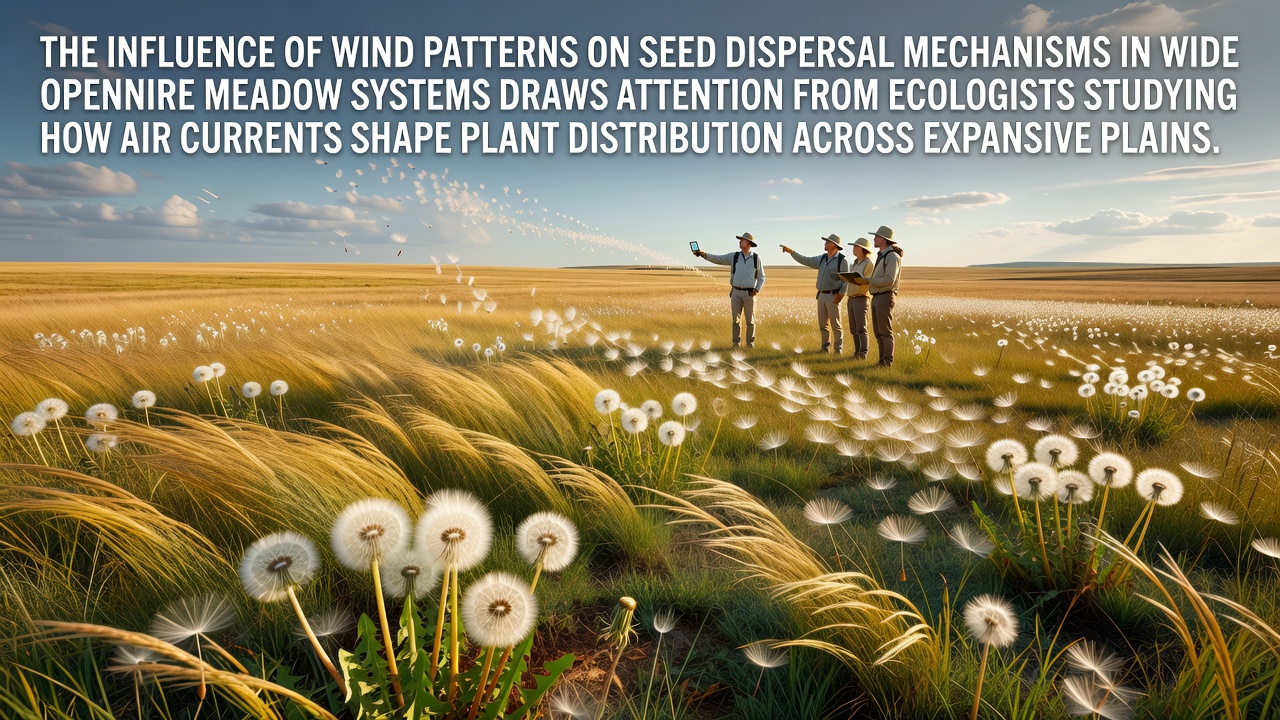
Ecologists track how prevailing winds carry seeds from parent plants across broad grassland expanses, and data from multiple field sites show consistent patterns in dispersal distances tied directly to wind speed and direction. Researchers measure these movements using marked seeds and anemometers placed at various heights, which reveals that lighter seeds travel farther during sustained breezes while heavier ones settle closer to the source. Studies conducted across North American prairies indicate that anemochory accounts for the majority of plant spread in open systems where few obstacles interrupt airflow.
Primary Dispersal Mechanisms in Open Terrain
Seeds equipped with pappus structures or wing-like appendages catch air currents more effectively, and observations confirm that species such as certain asters and grasses rely on these adaptations to achieve wider distribution. Wind gusts generated by thermal updrafts lift seeds higher into the boundary layer, allowing them to remain airborne longer before deposition occurs. Data collected by ground teams show that peak dispersal events coincide with seasonal wind shifts rather than constant conditions.
Continuous monitoring stations record how katabatic flows down gentle slopes interact with prevailing westerlies to create localized seed deposition zones, and these interactions produce clustered plant communities in specific meadow sections. Equipment deployed since early field seasons captures velocity gradients that directly correlate with seed fallout rates measured at ground level.
Geographic and Seasonal Influences on Distribution
Across expansive plains in both temperate and semi-arid regions, wind patterns vary by latitude and topography, which in turn shapes the resulting vegetation mosaics. Long-term records from multiple continents demonstrate that consistent directional winds promote linear spread along prevailing axes, whereas variable gust patterns create more irregular plant arrangements. Ecologists note that September 2026 marks the start of an expanded international monitoring campaign that will add high-resolution wind and seed data from additional meadow sites.
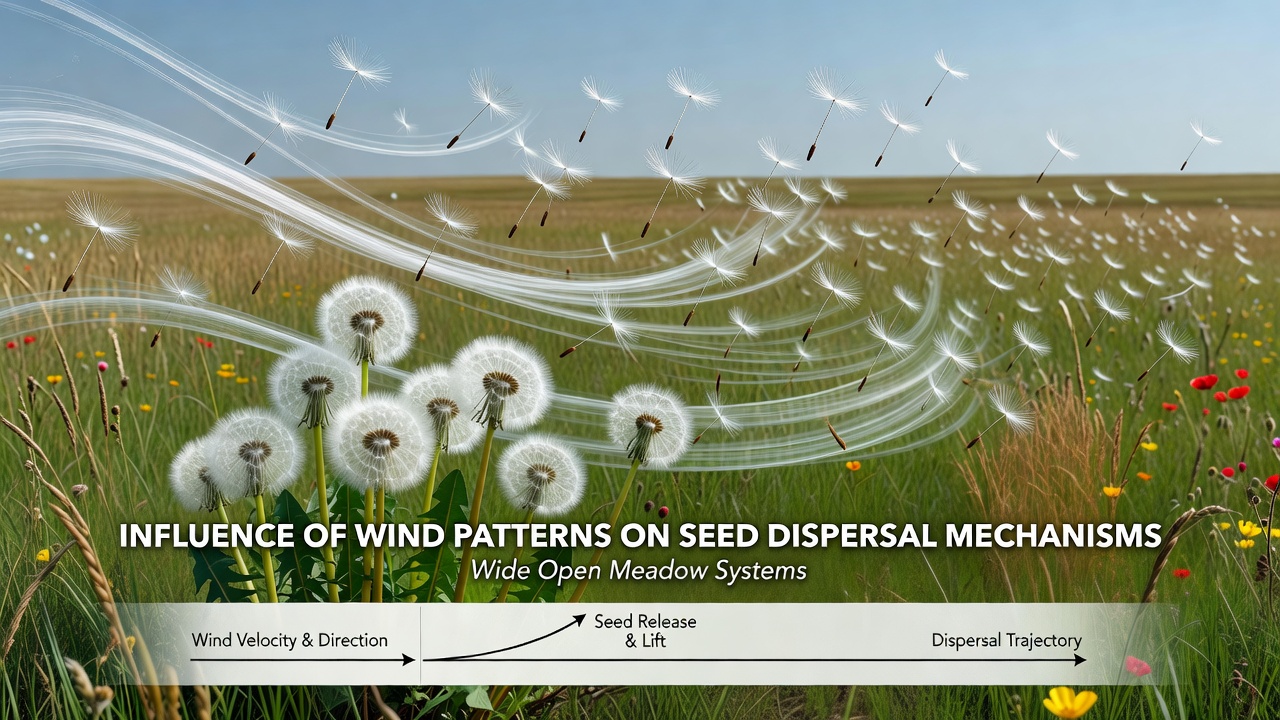
Researchers compare data sets from the central United States and southern Australia to identify shared principles, and findings published through government agricultural agencies highlight the role of wind corridors in maintaining genetic connectivity between distant populations. One study coordinated by European environmental institutes examined how spring and autumn wind regimes produce different dispersal kernels for the same species, with results showing measurable shifts in colonization fronts over successive years.
Measurement Techniques and Data Collection
Field crews deploy arrays of seed traps and portable weather stations to quantify both horizontal and vertical transport, while remote sensing tools provide broader context on surface roughness that affects near-ground turbulence. These combined methods allow teams to model expected spread distances under varying wind conditions without relying on single-point observations. Analysis of multi-year records reveals that extreme wind events, though infrequent, contribute disproportionately to long-distance dispersal events.
Modeling approaches integrate local wind rose diagrams with seed release timing, and outputs match observed plant distributions in several well-studied meadow systems. Teams from different research networks share standardized protocols to ensure comparability across sites separated by thousands of kilometers.
Implications for Plant Community Dynamics
Wind-driven seed movement influences succession patterns and species composition in open meadows, where new arrivals can establish in areas previously unoccupied by the same taxa. Records indicate that shifts in dominant wind directions over decades correspond with changes in the spatial arrangement of certain forbs and grasses. Continued collection of meteorological and biological data supports refined predictions of how future wind regime alterations may affect these systems.
Conclusion
Comprehensive measurements across multiple meadow landscapes demonstrate that wind patterns serve as the primary vector for seed dispersal in unobstructed plains, producing predictable yet variable distribution outcomes based on seed traits and airflow characteristics. Ongoing projects scheduled to expand in September 2026 will supply additional empirical data to test and update existing models. The accumulated evidence from diverse geographic sources continues to clarify the mechanisms linking atmospheric movement with plant biogeography in these environments.