Jordan Ludwig · 15 September 2026
Terrain Transitions and Their Impact on Local Flora in Elevated Grassland Zones
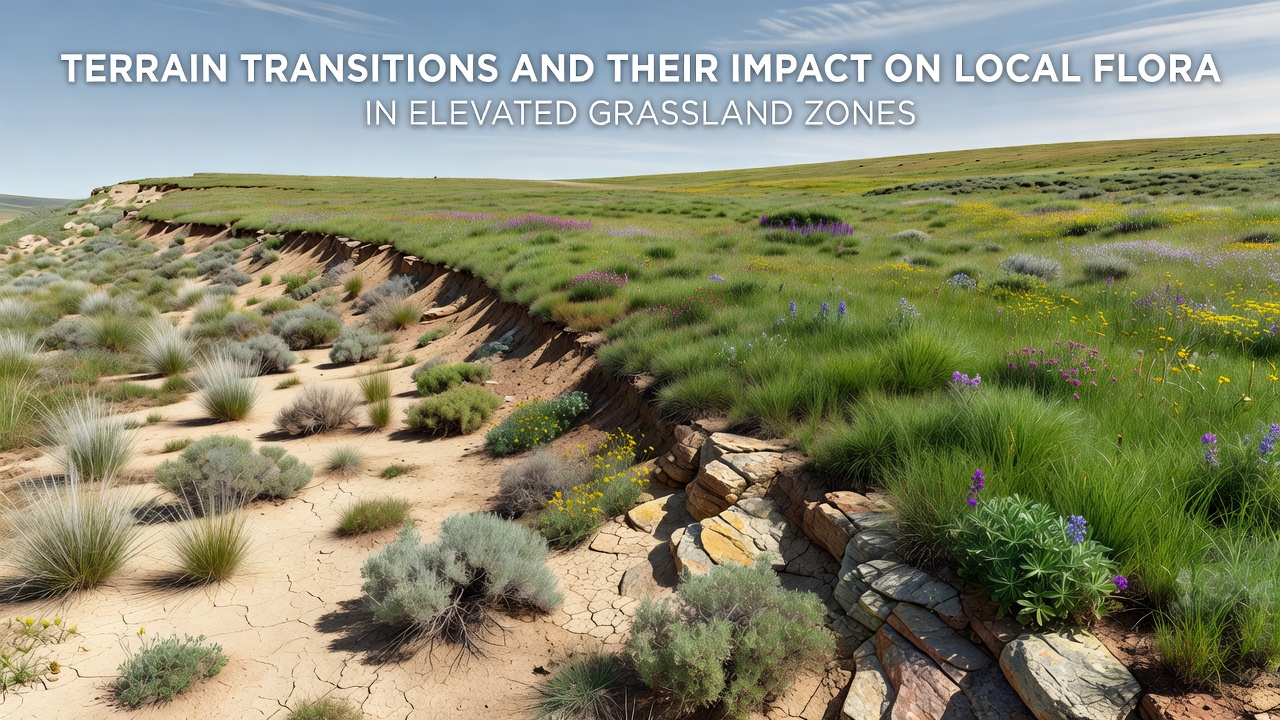
Researchers studying elevated grassland zones have documented how terrain transitions shape plant communities through changes in slope, aspect, and elevation gradients, and these shifts create distinct boundaries where species composition changes rapidly over short distances. Data from multiple field sites show that even minor alterations in topography influence soil moisture retention, nutrient availability, and exposure to wind, all of which determine which plants establish and persist in each zone.
Defining Terrain Transitions in Grassland Ecosystems
Elevated grasslands often feature transitions between flat plateaus and steeper slopes, or between north-facing and south-facing aspects, and these boundaries function as ecological filters rather than abrupt lines. Studies indicate that soil depth tends to decrease on steeper sections while organic matter accumulates more readily in sheltered depressions, and such variations support different assemblages of grasses, forbs, and shrubs within the same overall elevation band. Observers note that transition zones frequently span only a few meters yet host higher species richness because they combine conditions from adjacent terrain types.
Soil and Microclimate Effects on Plant Distribution
Soil properties shift noticeably across terrain transitions, with finer particles and higher water-holding capacity appearing on lower slopes while coarser, better-drained substrates dominate upper ridges. Microclimates follow the same pattern because south-facing slopes receive more solar radiation and experience greater temperature fluctuations, whereas north-facing areas maintain cooler, more stable conditions. Research indicates these differences drive phenological timing, with plants on warmer exposures often completing growth cycles weeks earlier than those on cooler aspects. Figures from long-term monitoring plots reveal that drought stress intensifies along south-facing transitions during dry periods, leading to reduced cover of moisture-dependent species and increased dominance by drought-tolerant grasses.
Flora Responses Across Elevation Gradients
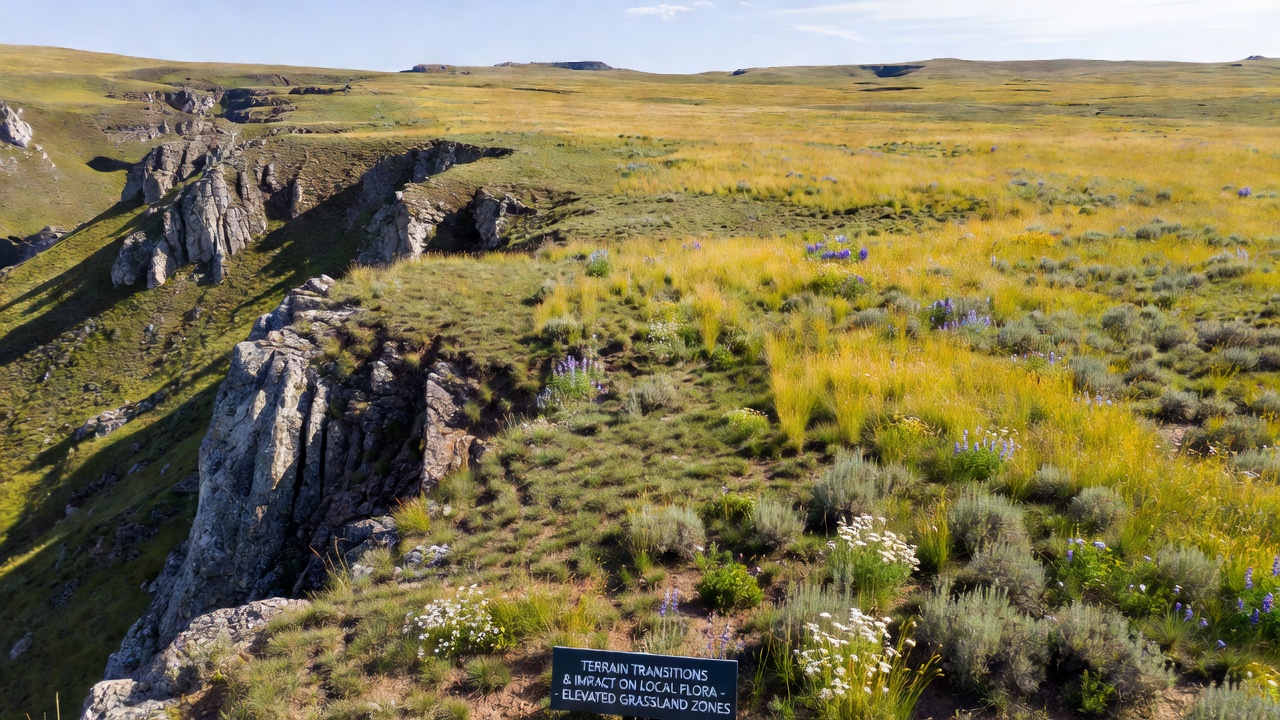
Local flora adapts to these transitions through specific traits such as deeper root systems on exposed ridges or more efficient stomatal control on slopes with high evaporative demand. In many regions, dominant bunchgrasses give way to mat-forming species and cushion plants as slopes steepen and soil thins, and this replacement pattern repeats across continents in similar topographic settings. Data collected through September 2026 at several North American and European sites showed accelerated upslope movement of certain forb species during that period, coinciding with warmer-than-average summer temperatures that altered competitive balances at transition points. Australian monitoring programs have recorded comparable shifts where terrain transitions coincide with changes in rainfall seasonality, allowing arid-adapted shrubs to expand into previously grass-dominated areas.
Documented Patterns from Field Research
Long-term studies conducted by the United States Geological Survey have tracked vegetation change across multiple transition sites in the Rocky Mountain foothills, and results show that transition zones act as refugia for certain rare species during extreme weather events while also serving as corridors for range expansion under changing climate conditions. European Environment Agency reports highlight parallel dynamics in alpine grasslands where terrain transitions buffer against uniform drying because varied topography creates localized moisture pockets. Those who've examined plot-level data note that transition areas often retain higher biomass during drought years compared to uniform flat terrain, yet they also experience more rapid invasion by non-native species when disturbance opens gaps in the canopy.
Seasonal and Interannual Variability
Seasonal cycles interact with terrain transitions because snowmelt patterns differ sharply between aspects and elevations, and this timing controls the start of the growing season for many grassland species. In September 2026, several research teams reported earlier senescence on south-facing transitions compared to previous decades, while north-facing slopes maintained green cover longer into the autumn months. Such differences compound over multiple years and influence seed production, seedling establishment, and overall community composition. Interannual climate variability further amplifies these effects, with wet years allowing temporary expansion of mesic species into drier transition zones and dry years reinforcing the dominance of xeric-adapted plants.
Implications for Ecosystem Monitoring
Monitoring programs now prioritize transition zones because they register environmental change more quickly than uniform grassland interiors, and repeated surveys at fixed transects provide early indicators of broader shifts in species ranges. Remote sensing combined with ground validation has improved detection of subtle boundary movements, while soil sensor networks capture the microclimate gradients that drive those movements. Observers note that continued data collection through seasonal windows such as September 2026 helps separate short-term weather responses from longer-term directional change in these sensitive locations.
Conclusion
Terrain transitions in elevated grassland zones create predictable yet dynamic patterns in local flora through their influence on soil, moisture, and microclimate gradients. Research from multiple continents demonstrates that these boundaries support distinct plant communities and respond rapidly to climatic variation, making them valuable indicators for ecosystem health. Continued observation and integration of field measurements with broader environmental data sets will clarify how these transitions evolve under ongoing environmental pressures.