Jordan Franke · 13 October 2026
How Microscopic Soil Interactions Drive Plant Resilience in Upland Grassland Zones
Upland grassland zones feature thin soils and variable moisture levels that challenge plant survival yet support diverse flora through intricate belowground processes. Microscopic organisms including fungi and bacteria form extensive networks that connect with plant roots and facilitate water retention along with nutrient absorption under these demanding conditions. Studies conducted across mountain meadows in North America and Europe reveal that these interactions enhance plant endurance against seasonal droughts and nutrient limitations without requiring external inputs.
Composition of the Soil Microbiome in Elevated Grasslands
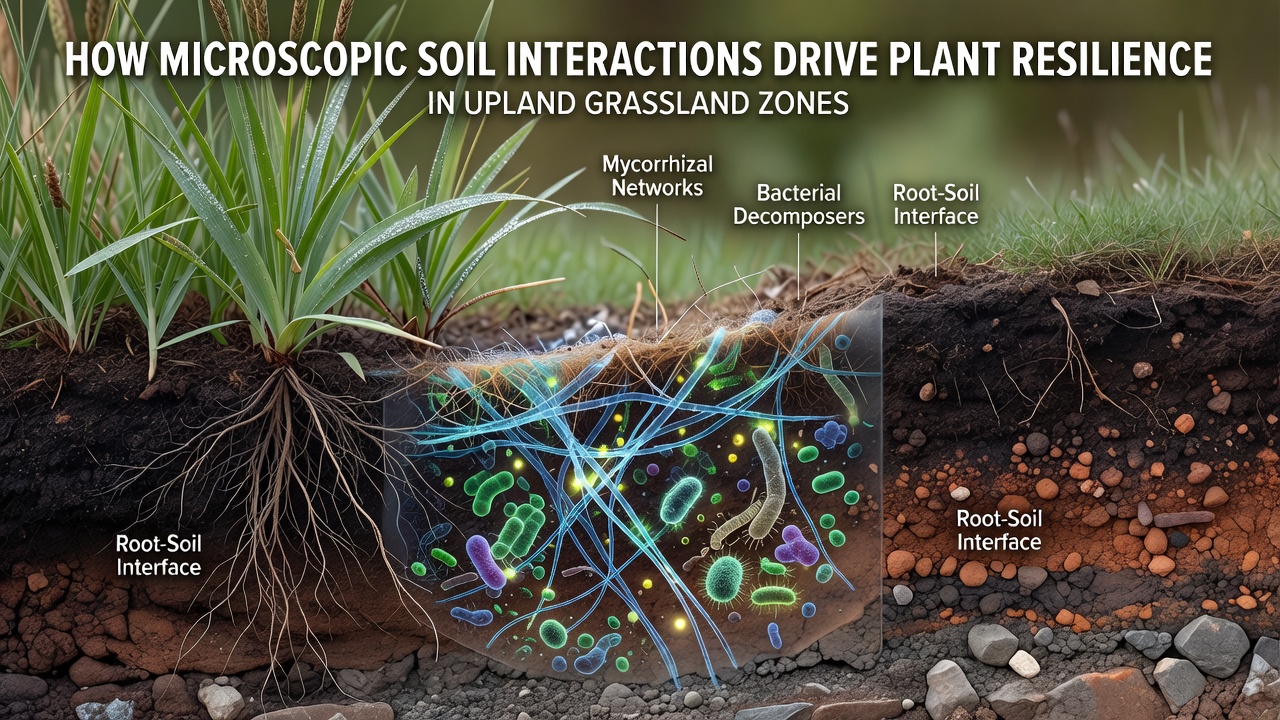
Soil in upland areas hosts a dense community of arbuscular mycorrhizal fungi alongside nitrogen-fixing bacteria and actinomycetes that colonize root surfaces of dominant grass species. Data from long-term monitoring sites indicate that fungal hyphae extend several meters from individual plants and create pathways for phosphorus and zinc transfer while bacteria produce enzymes that break down organic matter into plant-available forms. These communities shift seasonally yet maintain core functions that stabilize the rhizosphere even when surface temperatures fluctuate rapidly.
Mycorrhizal Networks and Resource Sharing
Arbuscular mycorrhizal fungi penetrate root cells of upland grasses and form arbuscules that increase the effective surface area for mineral uptake by up to forty times. Research published through institutions such as the USDA Natural Resources Conservation Service documents how common mycorrhizal networks link neighboring plants and allow carbon and nutrient redistribution during periods of scarcity. In zones where phosphorus levels drop below critical thresholds these fungal bridges sustain photosynthesis and biomass production that would otherwise decline sharply.
Bacterial Roles in Stress Mitigation
Plant growth-promoting rhizobacteria secrete siderophores and phytohormones that help grasses tolerate oxidative stress from intense ultraviolet exposure common at higher elevations. Evidence from field plots in the Rocky Mountains shows that bacterial populations capable of producing 1-aminocyclopropane-1-carboxylate deaminase reduce ethylene levels inside roots and thereby limit drought-induced senescence. Observers note that these bacteria also form biofilms around root tips which retain moisture films and shield against freeze-thaw cycles that occur frequently in autumn months.
Resilience Mechanisms Under Seasonal Pressures
During late summer dry spells the combined action of fungal hyphae and bacterial exopolysaccharides improves soil aggregation and creates micro-pores that hold water near roots. Figures from ongoing surveys in alpine meadows demonstrate that plots with intact microbial communities retain thirty percent more soil moisture than sterilized controls. As researchers prepare for expanded sampling campaigns scheduled to begin in October 2026 these patterns are expected to clarify further the thresholds at which microbial diversity begins to decline under prolonged warming trends.
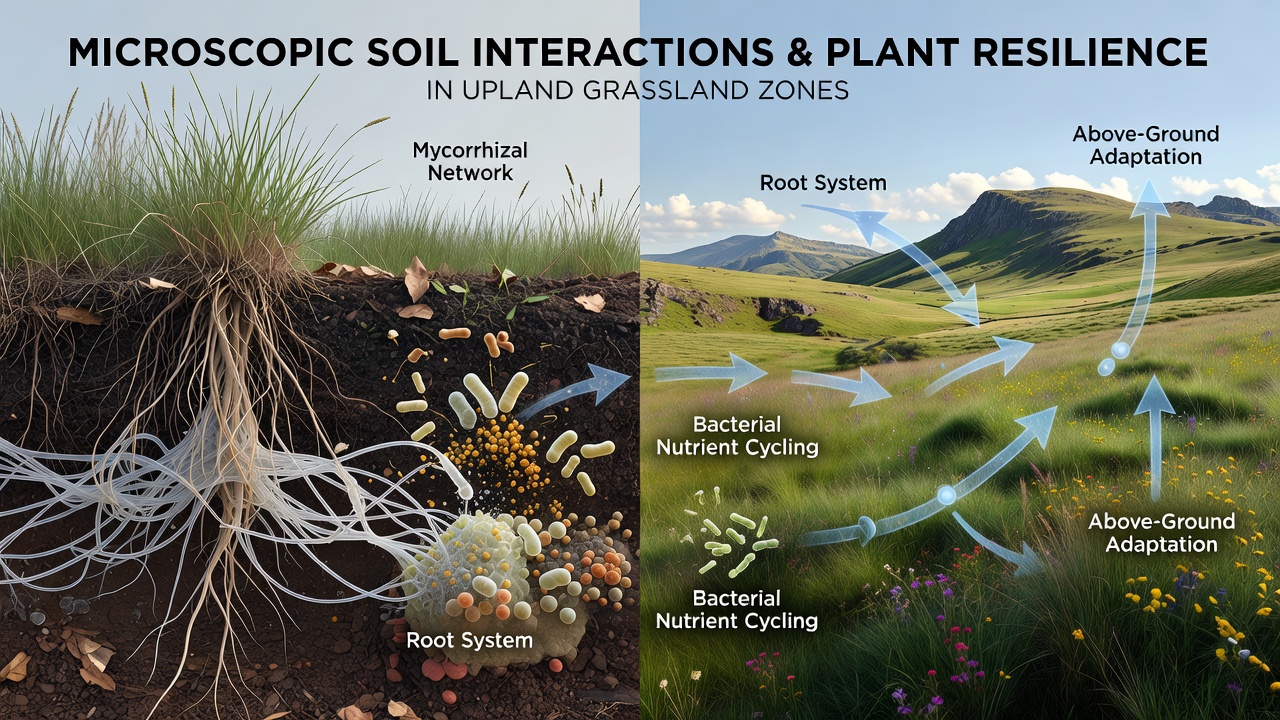
What's interesting is that certain bacterial strains isolated from native upland species produce volatile organic compounds that signal neighboring plants to close stomata earlier in the day and conserve internal water reserves. This signaling occurs through both direct contact and diffusion across the soil matrix and contributes to coordinated community-level responses that buffer entire patches against desiccation events.
Regional Observations and Supporting Data
Comparative analyses between Eurasian steppes and North American foothills grasslands reveal consistent enrichment of Glomeromycota phyla in root samples collected from elevations above 2000 meters. Australian research coordinated through the CSIRO further confirms that microbial inoculation of restored grassland plots accelerates establishment rates of perennial bunchgrasses by enhancing early-season nitrogen acquisition. These findings align across continents and underscore the universal importance of microscopic partnerships regardless of specific climatic overlays.
Conclusion
Microscopic soil interactions in upland grassland zones operate through layered fungal and bacterial networks that deliver resources and modulate stress responses at scales invisible to the naked eye. Continued monitoring through 2026 and beyond will refine understanding of how these communities respond to changing precipitation regimes and temperature extremes. The data already compiled establish that intact microbial diversity forms a foundational layer supporting plant persistence in environments where aboveground conditions alone would limit survival.